






Quick answer: Wash running clothes inside out in cold or warm water with a detergent made for synthetics like HEX Performance, and skip traditional fabric softener. Air dry them, because dryer heat breaks down the elastane that gives tights and shorts their stretch.
Modern running gear is built from polyester, nylon, and elastane knit tightly enough to pull sweat off your skin. That same tight knit traps body oils and bacteria, which is why a shirt can come out of the wash looking clean and still smell the moment you start sweating. This guide covers how to wash every type of running gear so it stays fresh and keeps performing.
Why running clothes need different care
Cotton absorbs water. Synthetics repel water but attract oil. Your sweat carries skin oils into the fibers, and regular detergents are built to lift water-based dirt, not oily residue lodged deep in a tight weave. The oil stays behind, bacteria feed on it, and odor builds wash after wash.
Research backs this up. A study from Ghent University (Callewaert et al., Applied and Environmental Microbiology, 2014) found that odor-causing bacteria grew more on polyester shirts than on cotton ones after a workout. Polyester also held onto smell after washing.
Step by step: how to wash running clothes
- Wash soon. Damp gear sitting in a hamper or gym bag gives bacteria hours to multiply. If you can't wash within a day, rinse the item in cold water and hang it to dry first.
- Turn items inside out. The inside is where sweat and oil collect. Turning it out also protects reflective details and prints.
- Close zippers and Velcro. Open hooks snag knit fabric and cause pilling.
- Sort by weight. Wash light tops and shorts separately from heavy towels or jeans, which rub and abrade thin fabric.
- Use cold or warm water, not hot. Hot water can set odor in synthetics and stress elastane. Cold or warm is enough with the right detergent.
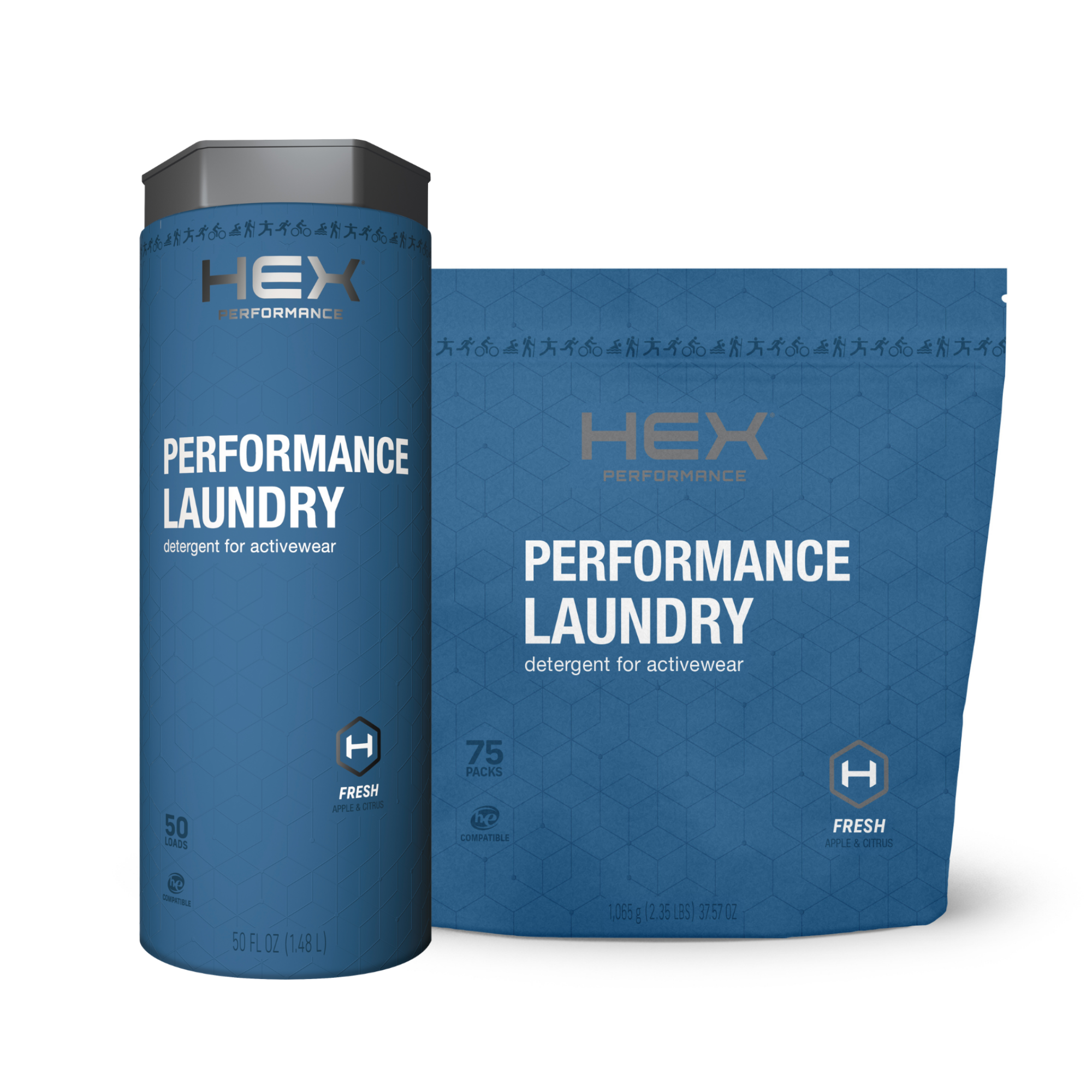
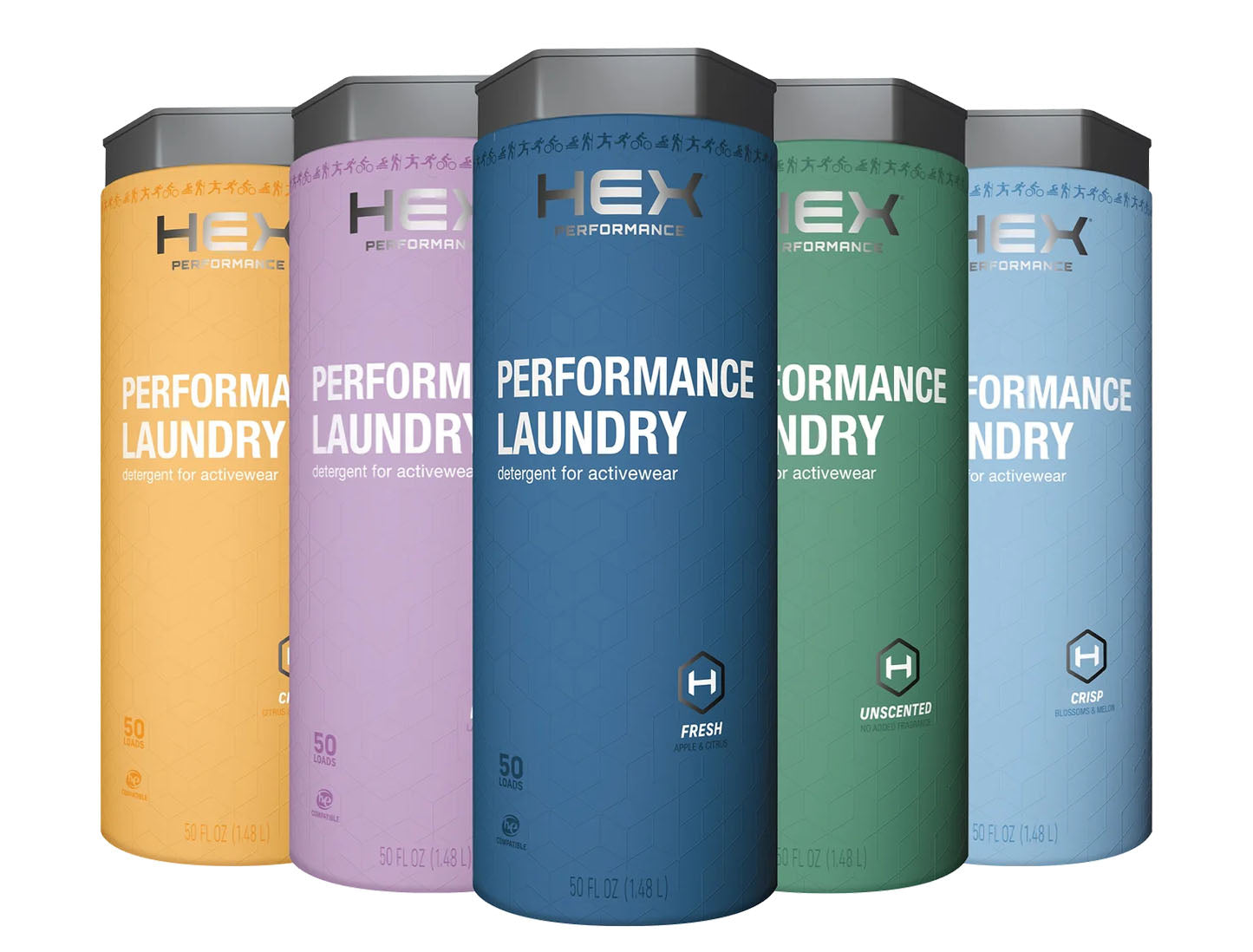
- Use a detergent made for synthetics. HEX Performance Laundry Detergent uses a patented molecule small enough to get into tight weaves and remove the oil and residue that standard formulas leave behind. It works in all water temperatures and in HE machines.
- Skip traditional fabric softener and dryer sheets. Both coat fibers with a waxy film that blocks wicking and seals odor in. Use an additive designed for these fabrics, like HEX Performance Booster.
- Air dry. Hang items or lay them flat. If you must use a dryer, choose the lowest heat setting.
How to wash each type of running gear
Keep your gear fresh, stretchy and performing longer.

How to get rid of odor that won't wash out
If a shirt smells the moment it gets warm, odor has built up in the fibers over many washes. A single normal wash won't clear it.
- Soak first. Fill a sink with cool water and a capful of detergent made for synthetics. Soak the item for 30 to 60 minutes, then wash as normal.
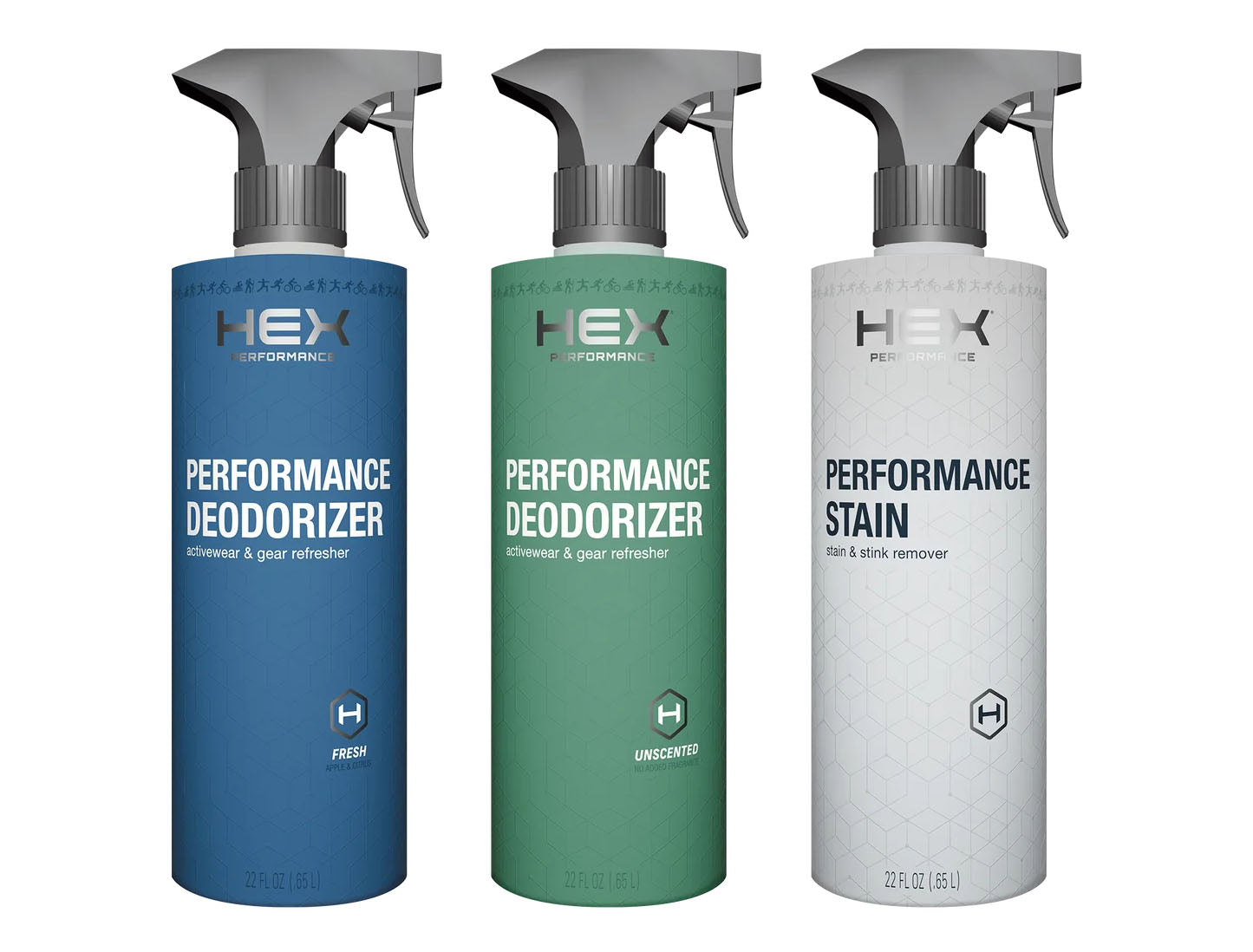
- Pretreat problem spots. Apply a stain and odor remover like HEX Odor & Stain Remover to armpits and collars, wait 15 minutes, then wash.
- Repeat. Old buildup can take 2 or 3 washes to clear completely.
- Freshen between washes. For shoes, hydration vests, and hats you can't wash often, HEX Deodorizing Spray removes odor without a full wash.
How often should you wash running clothes?
Wash anything that touches skin after every run: shirts, shorts, socks, sports bras, and tights. Outer layers such as jackets and vests can go 3 to 5 wears if they stay dry, but wash them sooner if they smell or get soaked.
Common mistakes
- Leaving wet clothes in a gym bag overnight
- Washing on hot to "kill the smell"
- Using fabric softener or dryer sheets
- Overloading the machine, which keeps water and detergent from moving through the fabric
- Drying tights and sports bras on high heat
FAQ
Can I wash running clothes with regular clothes?
Yes, as long as you use cold or warm water. Keep them away from towels, denim, and anything with zippers. Detergents like HEX are a blanket solution to all your laundry needs.
Does vinegar get rid of the smell?
Vinegar can help a little, but it does not reliably remove oily buildup. A detergent made for synthetics works better and won't leave a smell. It has the added benefit of actually sanitizing the fabric.
Why do my clothes smell worse when I sweat?
Warmth and moisture reactivate bacteria and odor compounds trapped in the fabric. Traditional detergents don't eliminate those bacteria.
Will this work for merino wool?
Yes. Use cold water, a gentle cycle, and lay merino flat to dry.

